
Introduction
When we think of the American Revolution, we often imagine the Founding Fathers, Minutemen, and patriots fighting for independence. Yet, one of the most overlooked groups in this struggle was the thousands of enslaved African Americans who chose to fight—not for the colonies, but for the British. These men, known as Black Loyalists, sought freedom from bondage in exchange for their military service. Their stories are rarely told, but they played a critical role in shaping the fight for liberty. Their courage and sacrifice remain a testament to the struggle for equality and freedom, yet their legacy has often been overshadowed by more well-known Revolutionary War narratives.
Lord Dunmore’s Proclamation: A Promise of Freedom
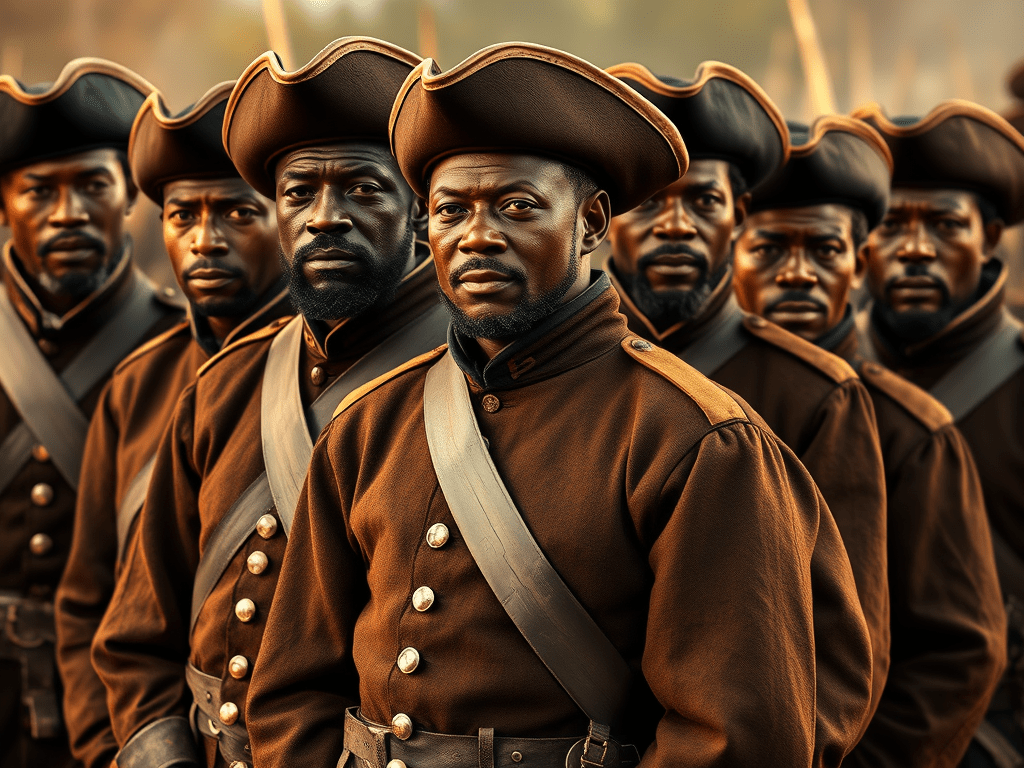
In November 1775, Lord Dunmore, the Royal Governor of Virginia, issued a game-changing declaration. His proclamation promised freedom to any enslaved person who fled their patriot owners and joined the British Army. This call to arms led to the creation of the Ethiopian Regiment, a unit composed of formerly enslaved Black men willing to risk everything for a chance at freedom. These soldiers fought in major battles, wearing uniforms boldly inscribed with the words: “Liberty to Slaves.”
Lord Dunmore’s strategy was not just about military strength; it was also a psychological weapon. By offering freedom, he weakened the Southern economy, which was heavily reliant on enslaved labor. The proclamation instilled fear among slave-owning Patriots, who saw the increasing number of runaways as a direct threat to their way of life. Though this action earned Dunmore the loyalty of many enslaved Africans, it also intensified tensions between British loyalists and American revolutionaries.
The Ethiopian Regiment in Battle
Though their numbers were small, the Ethiopian Regiment proved to be fierce fighters. They engaged in conflicts like the Battle of Great Bridge, where they demonstrated bravery and skill. However, the promise of freedom would not be fulfilled easily. Disease, battle losses, and shifting war strategies led to the regiment’s eventual disbandment, but their contributions had already left a mark.
Despite their early enthusiasm, Black Loyalist soldiers faced immense challenges. Many suffered from disease, harsh conditions, and lack of resources. Furthermore, while some British officers treated them as equals on the battlefield, others viewed them merely as expendable reinforcements. Still, these soldiers continued to fight for the promise of freedom, often displaying unwavering loyalty to the British Crown.
Notable Black Loyalists
Several Black Loyalists distinguished themselves during and after the war:
- Colonel Tye (Titus Cornelius): An escaped slave from New Jersey, Tye became a feared guerrilla leader, commanding the Black Brigade and conducting raids against Patriot forces.
- Boston King: After escaping slavery, King joined the British forces and later became a prominent Methodist preacher. He and his wife were among approximately 3,000 Black Loyalists evacuated to Nova Scotia, as recorded in the ‘Book of Negroes.’
- Stephen Blucke: Often referred to as the “Black Loyalist Colonel,” Blucke led the Black Company of Pioneers and later became a leader in the Black Loyalist community in Nova Scotia.
- Richard Pierpoint: Originally from Senegal, Pierpoint was captured and sold into slavery before gaining freedom by fighting for the British. He later settled in the Niagara region, receiving 200 acres of land.
What Happened After the War?
When the British surrendered at Yorktown in 1781, many Black Loyalists faced an uncertain future. While some were re-enslaved by former owners, thousands found refuge in Nova Scotia, Canada. But life there was harsh—free Black communities faced extreme poverty, land shortages, and discrimination. Promised land grants by the British government often went unfulfilled, leaving many Black Loyalists struggling to survive in harsh climates with little assistance.
Seeking true freedom, nearly 1,200 Black Loyalists left Nova Scotia in 1792, sailing to Sierra Leone, West Africa, to establish a settlement where they could live free from oppression. This migration was one of the earliest organized efforts for Black self-governance in the modern era. Though conditions in Sierra Leone were difficult, and British oversight often led to exploitation, the Black Loyalists continued to fight for autonomy and self-determination. Their experiences helped lay the foundation for later movements advocating for Black rights and independence across the Atlantic world.
A Forgotten Legacy
The Black Loyalists’ struggle for freedom did not end with the Revolution—it was just the beginning. Their determination influenced abolitionist movements in Britain and America. Yet, their stories remain overshadowed in history books. Today, we honor their courage and sacrifice, recognizing that their fight for liberty was just as significant as any soldier’s.
Historians are now rediscovering their narratives, piecing together letters, military records, and oral histories that shed light on their contributions. Sites like Birchtown in Nova Scotia and Freetown in Sierra Leone stand as reminders of their journey and perseverance. Theirs was not just a fight for survival, but a fight for dignity, identity, and justice—principles that continue to resonate today.
Conclusion
History remembers those who shape the narrative. For too long, the Black Loyalists have been left out of the story of American independence. By bringing their experiences to light, we acknowledge that the pursuit of freedom was a battle fought by many—not just those who won the war, but also those who fought for the right to be free. Their resilience and legacy deserve to be recognized, taught, and remembered as a crucial part of the Revolutionary War story.
📖 Want to learn more about their untold history? Join the discussion and explore more stories like this on the Patriot Legacy Project.
#BlackLoyalists #RevolutionaryWar #ForgottenStories #HistoryMatters
More Hero’s Coming soon….
 The Patriot Legacy Project
Leave a comment